Michael Caine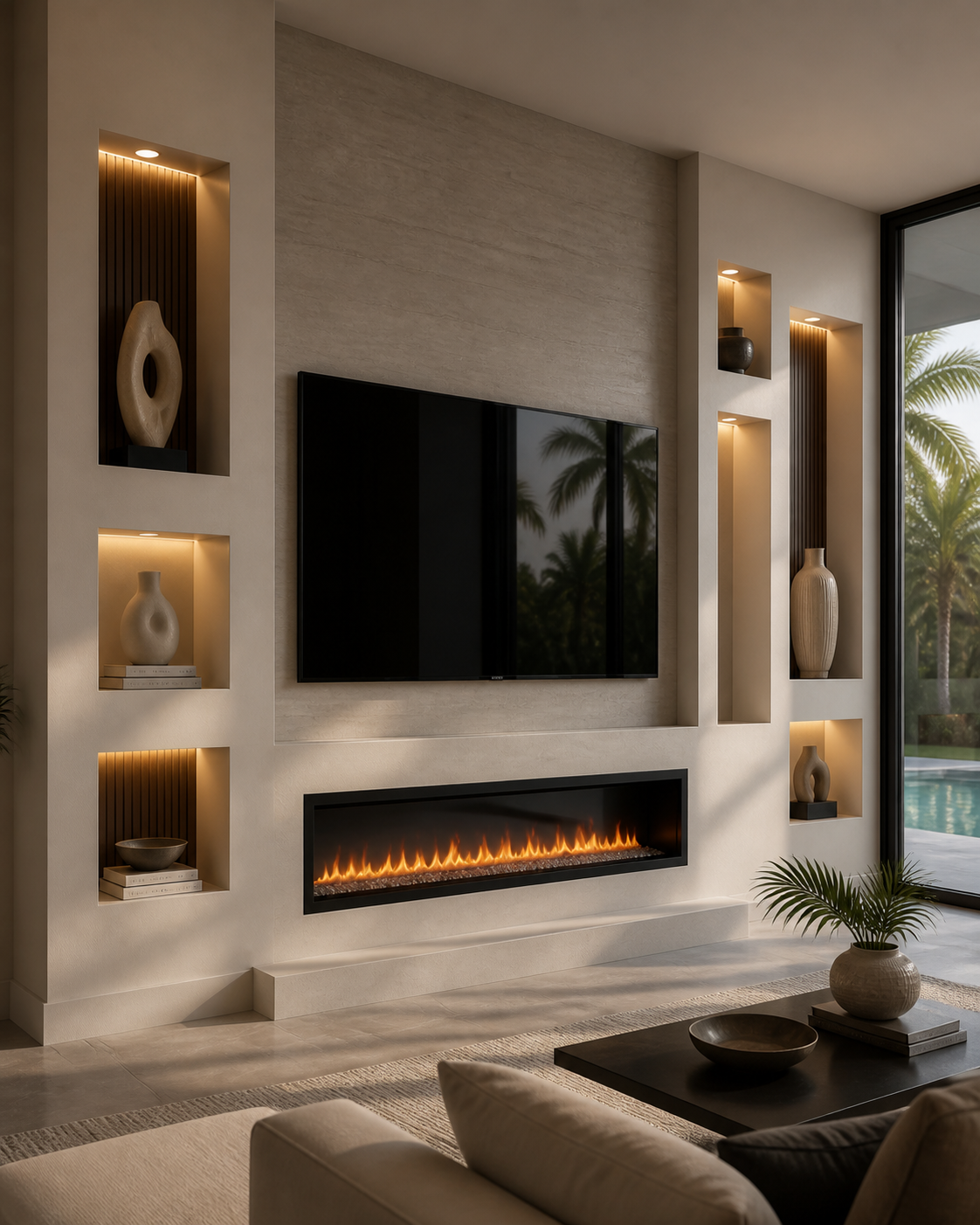
A wall niche creates display space without requiring another piece of furniture. Whether shallow or deeply recessed, it can hold art, ceramics, books, lighting, or a single sculptural object. Successful wall niche design ideas focus less on filling every inch and more on making the recess look like a deliberate part of the architecture.
Match the Niche to What It Will Display
Dimensions should follow function. A narrow vertical niche suits sculpture or a tall vase, while a wider horizontal recess can accommodate books, framed objects, or several smaller decorative pieces.
Depth also changes the effect. Shallow niches behave almost like framed wall art, while deeper versions create stronger shadows and may support shelves.
Before construction, choose the type and approximate scale of objects that will live inside. Designing the niche first and trying to fill it afterward often leads to awkward proportions.
Create Contrast Inside the Recess
The back wall provides an opportunity to use a different material without covering an entire room. Tile, stone, wallpaper, wood, plaster texture, or a darker paint shade can make the niche easier to notice.
People collecting built-in design inspiration may find that the most successful displays use restrained contrast rather than several competing materials. One strong background is usually enough.
Lighting can add another layer. A concealed LED strip or small recessed light creates depth after dark and makes the contents easier to see.
Relate the Niche to Nearby Architectural Features
A niche should rarely float randomly on an empty wall. Aligning it with cabinetry, furniture, doorways, or another architectural feature makes its position easier to understand visually.
Where niches sit near a hearth or feature wall, fireplace styling ideas can help with balancing recesses on one or both sides of the room. Perfect symmetry isn’t always necessary, but the visual weight should feel controlled.
| Niche Type | Useful For | Design Effect |
|---|---|---|
| Tall vertical | Sculpture | Adds height |
| Wide horizontal | Grouped objects | Expands the wall |
| Shelved recess | Books and decor | Adds storage |
Keep the Display Connected to the Whole Home
Materials used inside a niche can echo finishes elsewhere. Wood matching nearby cabinetry, stone related to flooring, or paint repeated in another room can prevent the recess from feeling like a disconnected feature.
Looking at whole-home design ideas can reinforce the value of repeating architectural themes across different areas. A house feels more coherent when its details share materials, shapes, or proportions rather than competing for attention independently.
What People Often Get Wrong With Niches
The most common problem is overfilling them. Because a niche is technically storage space, it’s tempting to cover every shelf with small objects. That usually weakens the architectural effect and creates visual clutter.
Placement can also cause trouble. A niche positioned too close to a doorway, thermostat, switch, or large piece of furniture may appear squeezed into leftover wall space. Planning electrical lines, framing, lighting, and display dimensions before cutting into the wall avoids many expensive adjustments.
Frequently Asked Questions
How deep should a decorative wall niche be?
Depth depends on what will be displayed. Slim decorative objects require little space, while books, pottery, or larger accessories need a deeper recess with enough clearance around them.
Should a wall niche have shelves?
Only when the display benefits from multiple levels. An unshelved niche often feels more architectural and gives a single artwork or sculptural object greater visual impact.
Can you add lighting inside an existing niche?
Often, yes, although wiring access matters. Battery lighting is simpler, while hardwired fixtures usually provide a cleaner permanent result when electrical work is practical.
Give the Recess a Clear Purpose
A wall niche earns attention through proportion and restraint. Decide what it needs to hold, position it in relation to the room’s architecture, and choose one or two finishes that strengthen its depth. Leaving enough empty space around displayed objects often produces a more polished result than treating every niche as another shelf to fill.