Michael Caine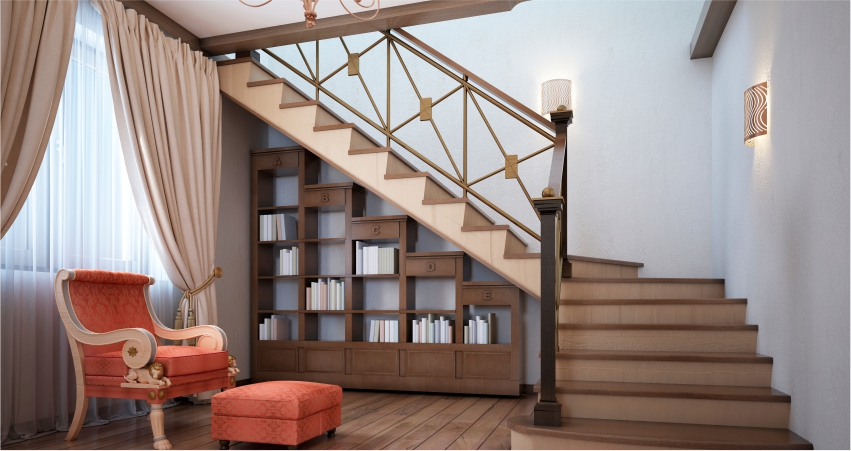
A staircase can contain more usable volume than its exterior suggests. Stair riser storage ideas transform selected risers or spaces beneath individual steps into compact drawers and concealed compartments, creating useful storage without placing another cabinet in the room.
How Stair Riser Storage Uses Existing Space
Closed staircases typically contain framing and voids beneath the treads. In some designs, a portion of that space can be accessed through drawer fronts built into the vertical risers.
The concept works particularly well for small household objects. Shoes, gloves, pet accessories, reusable bags, children’s items, and lightweight tools can fit without requiring deep shelving.
Not Every Staircase Can Be Altered
Structural members must remain untouched unless a qualified professional confirms that modification is safe. Electrical wiring, heating components, plumbing, or other services may also run beneath or beside the stairs.
Choose Drawers for Frequently Used Items
A stair drawer is most practical when it opens smoothly and closes flush with the riser. Full-extension hardware makes the rear of the compartment easier to reach.
Exploring functional home design examples can help you decide whether visible pulls, finger grooves, or push-to-open hardware best suits the staircase.
Drawers nearest the bottom steps are usually easiest to access because users don’t need to bend over higher treads.
Create Concealed Compartments Carefully
Some homeowners prefer storage that disappears completely into the staircase. Flush fronts can conceal occasional-use objects while preserving a clean stair profile.
Ideas centered on refined interior styling can be helpful when the goal is to blend practical storage into surrounding finishes rather than make the drawers a visual feature.
| Storage Type | Useful For | Design Consideration |
|---|---|---|
| Pull-out riser | Shoes | Durable slides |
| Shallow drawer | Gloves and keys | Limited height |
| Lift-up tread | Rarely used items | Safe closure |
| Flush compartment | Small accessories | Easy identification |
Keep Safety Ahead of Storage Capacity
A staircase has to remain dependable first and useful second. Added compartments shouldn’t weaken framing, create projections that catch feet, or interfere with normal step dimensions.
Looking at compact-space organization can help you balance hidden storage with simpler alternatives elsewhere in the room.
Non-slip tread surfaces and consistent stair geometry should remain unchanged whenever a storage conversion is planned.
Mistakes That Make Stair Storage Frustrating
Hidden compartments sound appealing, but storage becomes inconvenient when drawer fronts are hard to grip or objects disappear into deep cavities. Dividers can prevent small items from rolling toward inaccessible corners.
Another mistake is placing everyday items in compartments halfway up the staircase. Repeatedly stopping on the steps to open storage can create unnecessary congestion. The lowest steps are generally more convenient for items used regularly.
Frequently Asked Questions
Can every stair riser become a drawer?
No. Stair framing varies considerably, and structural supports or utilities may block the space behind some risers. The construction should be examined before any opening is created.
What items are best stored inside stair risers?
Lightweight, compact items such as shoes, scarves, pet leads, reusable bags, toys, or small household accessories are usually more suitable than heavy equipment.
Are push-to-open stair drawers practical?
They can create a clean appearance, although the hardware must hold the drawer firmly closed and withstand repeated use in a high-traffic part of the home.
Treat the Staircase as Furniture
A well-designed stair drawer should feel like part of the staircase rather than a box inserted into it. Start with the easiest accessible cavities, protect the structure, and choose items that genuinely benefit from nearby storage. Done carefully, a staircase can hide useful organization in space that otherwise contributes little to daily life.