


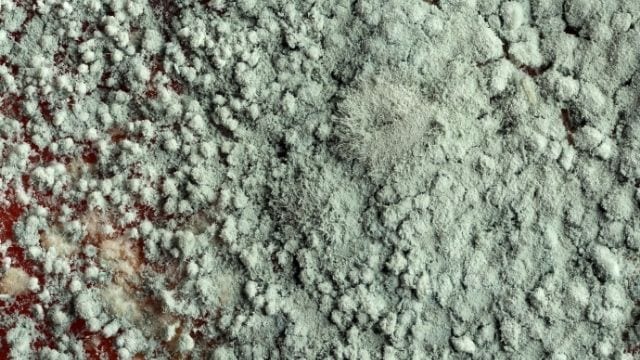
Mold doesn’t just pop up one day. It’s a direct result of moisture finding a home within your walls and moisture that has likely already caused damage by the time you notice the mold itself. The key to fighting mold is catching moisture issues early, long before the stuff starts creeping across your drywall.
Your body is reacting before your eyes are
One of the most undetected signs that mold is present is a cycle of physical symptoms based on your whereabouts. If you notice that you’re constantly sneezing, experiencing watery eyes, skin irritation, or a cough that magically disappears a few days after leaving your house – these symptoms are not random. Oftentimes, your immune system is just reacting to mold spores that are present in the air.
Mold spores are so tiny that they can easily travel through your HVAC system and float in the air with normal air currents. You might be inhaling a high number of spores from a colony that you can’t see because it’s hidden, maybe behind your drywall or inside a wall cavity. If your symptoms are in sync with the amount of time you spend indoors and there’s no other logical explanation, make sure to take that pattern seriously.
That smell isn’t just a damp day
One of the most reliable early indicators that there’s active mold somewhere in the building is a musty, earthy odor that sticks around even after you’ve cracked some windows. This smell is caused by microbial volatile organic compounds, or MVOCs, which are the gases that mold colonies release as they digest organic matter.
Pay attention to where you notice the smell. Is it strongest near a particular baseboard or vent, or underneath a rug? This is important directional information. Follow it. A smell you just can’t shake that improved ventilation doesn’t solve is an issue that often can’t be resolved until the source has been removed.
Discoloration you’re tempted to ignore
Mold doesn’t always resemble the black stains you imagine. Early-stage mold is often inconspicuous – a light yellow stain on a ceiling, gray spots on grout, or a slightly greenish area at the base of a wall. Most people mistake these as minor cosmetic issues and mask them with paint.
However, any discoloration on building materials is likely caused by a persistent source of moisture, not a one-time event. Stachybotrys chartarum, or black mold, grows on high-cellulose materials like fiberboard and drywall, and it produces mycotoxins that can cause respiratory and neurological problems. It’s unsafe to cover it with paint; and it will continue to grow until you remove the source of moisture.
Structural changes in walls and floors
Paint bubbles, wallpaper peels, baseboards warp… These are not just cosmetic aging signs – these are indications that water is trapped inside the assembly. When walls become wet and cannot dry, the finishes show you that before the mold does – on the outside.
Also, know that your subfloor is in danger. The plywood or OSB layer under your nice finished floor is very mold-prone, and once that is compromised, you can have mold under your hardwood or tile without any surface hints. Inspect soft underfoot spots, a spongy feeling as you walk, and seams separating on your floor carefully before the situation worsens.
Condensation as a recurring problem
Occasional condensation on a cold window during winter isn’t alarming. But persistent condensation on windows, metal pipes, and concrete walls – especially in rooms where it keeps returning – indicates that indoor humidity is consistently running too high. When relative humidity climbs above 60%, mold colonization becomes nearly inevitable on any surface with organic material. That includes porous materials like insulation, carpeting, and wood framing. A hygrometer costs very little and takes the guesswork out of whether humidity is the issue. The target is below 50%.
Also check whether your HVAC system is contributing. Ductwork that has condensation buildup or that runs through unconditioned spaces can harbor mold and then distribute spores through every room in the house each time the system runs. Fix or replace the offending system and clean the impacted ducts.
White deposits that look harmless
Efflorescence is a common problem that occurs in concrete and brick. Many people believe it is mold or mildew or part of the natural deterioration of concrete. However, it is a warning sign of serious water movement through the structure. As water enters the masonry, it carries water-soluble salts which are deposited on the surface of the concrete or brick as the water evaporates.
It won’t cause the same health effects as mold directly, but it tells you water is getting in. Wherever water is consistently entering a structure, mold conditions aren’t far behind.
Past leaks are never fully “over”
Most actual mold problems start here. A pipe leak you had repaired, a minor flood that “seemed to take care of itself,” a one-time roof leak – we all tend to compartmentalize these as “done” situations. They’re not. Not unless the affected areas were professionally dried and tested.
FEMA tells us that mold can become a problem on damp surfaces within 24-48 hours. Just “letting it air-dry” doesn’t remove enough moisture from the interior of porous building materials to prevent it. If a previous water event wasn’t dried with professional gear and monitored for moisture content, mold is probably growing inside a wall or somewhere else right now.
The only way to prevent that happening is to hire a Water Damage Restoration, Knoxville, TN company who has the right equipment to dry out the insides of walls, floors, and other building cavities and not just the surfaces.
Mold is always downstream of water
All of these indicators are a result of water making its way in and not being ventilated. Getting rid of mold and fungus without taking care of the water problem is not effective. First, locate the source of all that moisture, eliminate or control it, and then clean up the mold. This order is the right one.
Leave a comment