


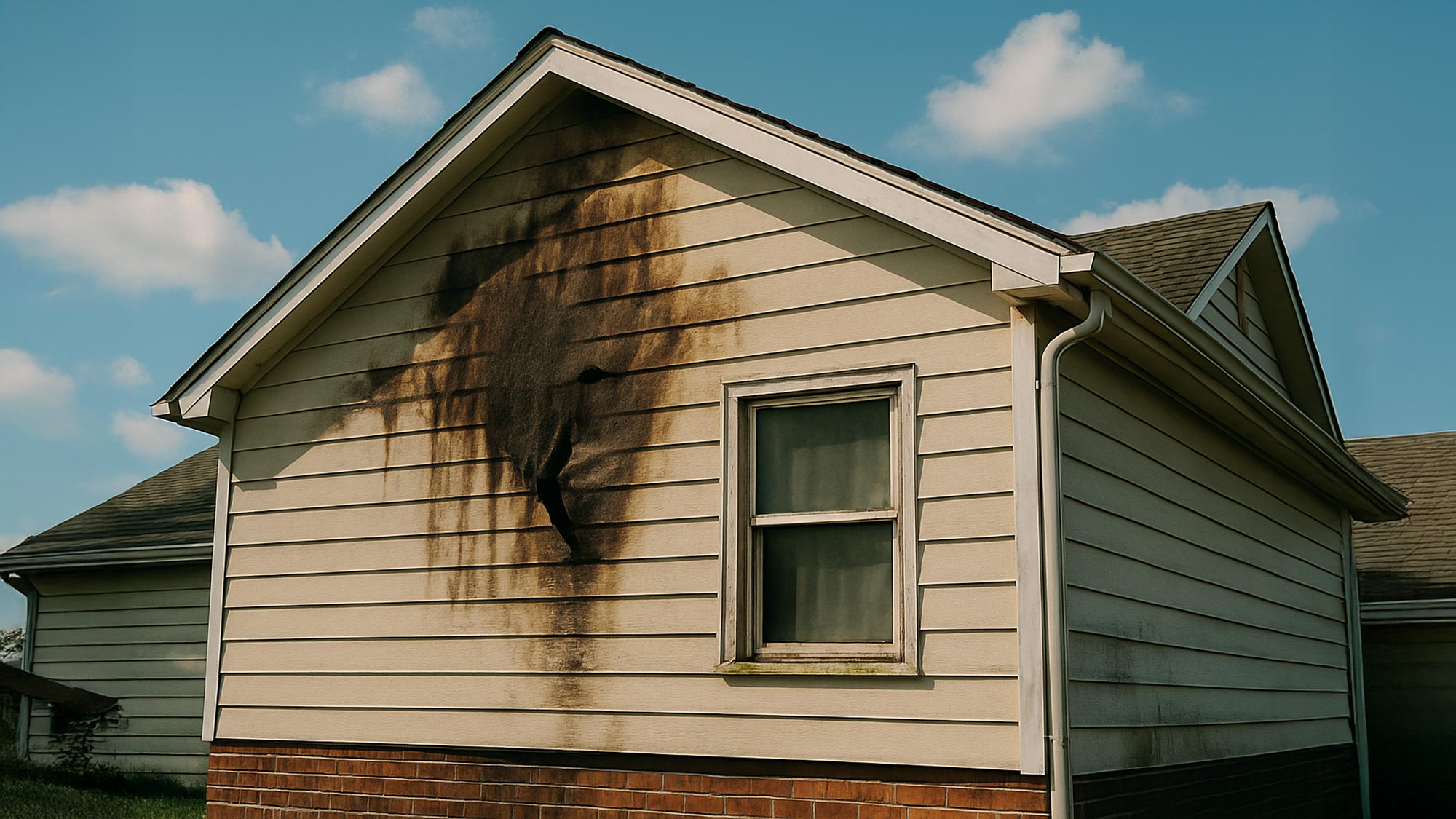
Water damage is seldom obvious. When a roof fails or a sink springs a leak, the damage has often gone unnoticed for weeks, even months. The people who escape five-figure repair bills aren’t the lucky ones. They’re the observant. They’re paying attention to things most people don’t notice.
Baseboards and trim are your first informants
Simply run your hand along the baseboard. If it comes away wet, you have a problem. And don’t delay. Wood is a prime spot for mold to grow, so if you don’t get your baseboards bone-dry within 24 to 48 hours of the first soaking, there’s a good chance that spores (pretty invisible at first but very musty in smell) have taken root. Fix the leak first, suck the moisture out of the baseboards second.
What your nose is trying to tell you
A persistent musty, damp smell attracts attention to building areas with ongoing moisture problems. If the smell decreases after relieving humidity, the area may not need intensive mold exploration. However, if the smell persists, it’s a clue that it’s time to start looking. A musty or moldy smell is a dangerous warning that your air quality has suffered. It means mold spore levels have already become high enough to remain symptomatically active.
Use your nose to track mold. Walk around. Where does it smell damp and musty? In the corner of a seldom-used room? In a closet? From beneath the carpet near a shower stall? In a storeroom in contact with outdoor air? Next to the foundation in a finished basement? From the crawl space under the kitchen? Find the mold with your nose.
The utility bill nobody reads carefully enough
Leaks waste a lot more water than you’d ever imagine and they can go undetected till you end up with a hefty bill. A slow leak inside a wall or beneath a slab can waste hundreds of gallons monthly without a single visible drop. Pull out your water bills from the last three months and compare them. An unexplained spike of 15 to 20 percent or more, with no change in household usage, is a real diagnostic signal – not a billing error to dispute and forget. Professionals specializing in water damage restoration Salt Lake, UT often point out that many of their biggest jobs started as leaks that were detectable long before they caused structural damage. The bill is one of the most overlooked tools a homeowner has.
Read the ceiling stains
Ceiling rings in shades of yellow or brown discoloration are not cosmetic. The circular nature of these rings, often referred to as shadowing, suggests that water has been pooling on top of the drywall from above. It might be a leak in a roof flashing, a floor seal in the bathroom directly overhead, or a tiny copper pipe leak due to corrosion. Those can seep behind the drywall for months before they are finally manifested in the stain.
Discoloration with a dark ring that has a defined border and a center that appears lighter has repeatedly dried and re-wet. That often points to an intermittent source, such as a roof that only leaks after heavy rain. There is probably a current, continuing leak in a stain that appears uniformly wet.
If the drywall has started to sag or bubble, the gypsum is already too wet to be saved. You have to take it down and replace the ceiling section.
Basement floors and the foundation pressure problem
One of the first locations where water seeps into a home is where your basement floor meets the walls. Check that cove joint – look for hairline fractures running along the seam and white chalky powder on the wall surface. The powder is efflorescence and it’s harmless on its own. But it’s evidence that water is moving through that wall and the sill plate, the lowest horizontal wood member of your wall framing, sits just above that zone.
The soft spot test in bathrooms
Apply pressure on the floor around the toilet base and the shower or tub edge. A solid subfloor will feel similar to pressing against a table. If you notice any give, bounce, or sponginess, then water has probably seeped through the wax ring or tile grout, and it’s actively destroying the plywood or OSB below.
This type of subfloor destruction will not be visible above you until it becomes severe. Generally, by the time you notice the softness, the damage tends to have spread quite a bit beyond the area where you are standing.
If you have an active mold smell, soft subfloor, efflorescence with ceiling cracks, or repeated ceiling stains, then it’s already too late for observations. In these cases, calling a professional makes sense because they’ll use infrared thermography to locate the full moisture boundary behind walls before starting any tear out work, preventing unnecessary demolition while ensuring that nothing wet is sealed up inside.
Don’t wait for the obvious
The vast majority of truly nasty water-damage outcomes we encounter during the course of residential remodeling do originate from a minor roof leak, a slowly failing window, or a virtually invisible pinhole in a plastic water line under the floor. These kinds of leaks evidently aren’t traumatic enough to push the homeowner over the edge into prompt action. You probably considered it long enough to register it was a problem… and then kept going. No sirens, no fireworks. Just a trickle.
Leave a comment